Conventional cameras depend on light. At night that means floodlights and the power to run them, and even then the useful range is short and every shadow is a blind spot. Dust, smoke, fog and heavy rain defeat them further. On a mine boundary or a farm fence line, the hours that matter are precisely the hours a visible-light camera is least useful.
The problem
Most cameras stop working exactly when you need them.
Detection to 1km
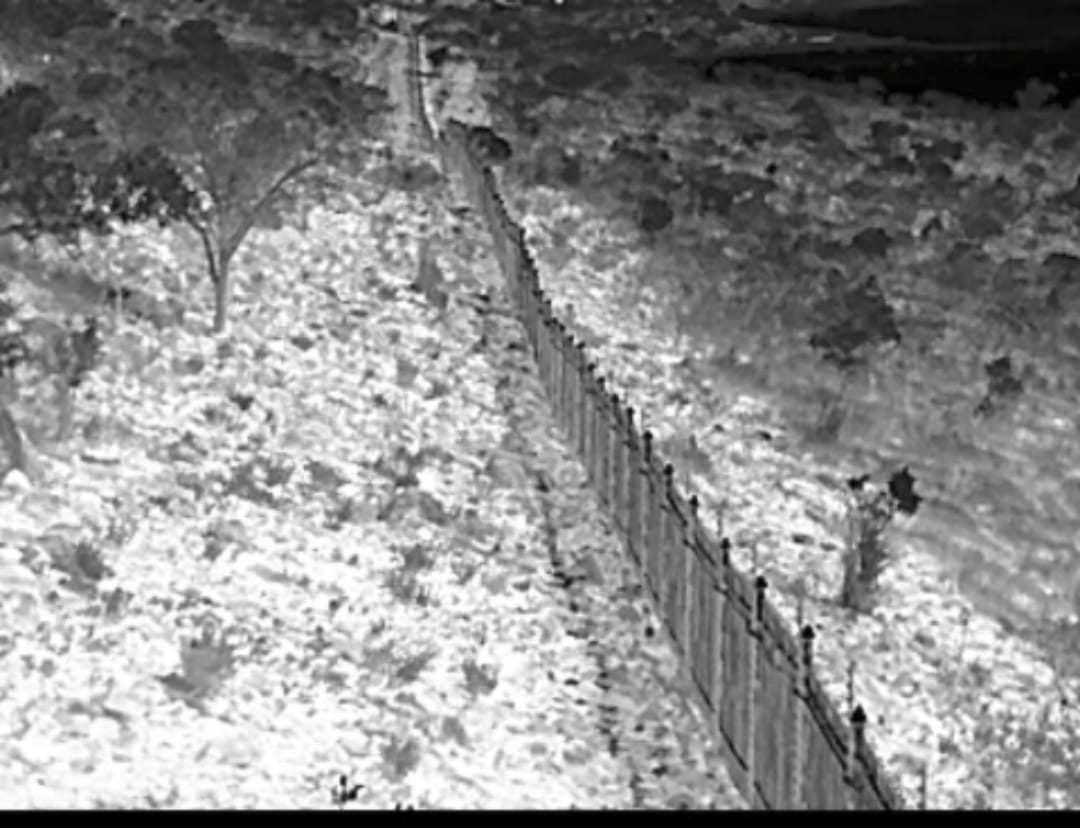
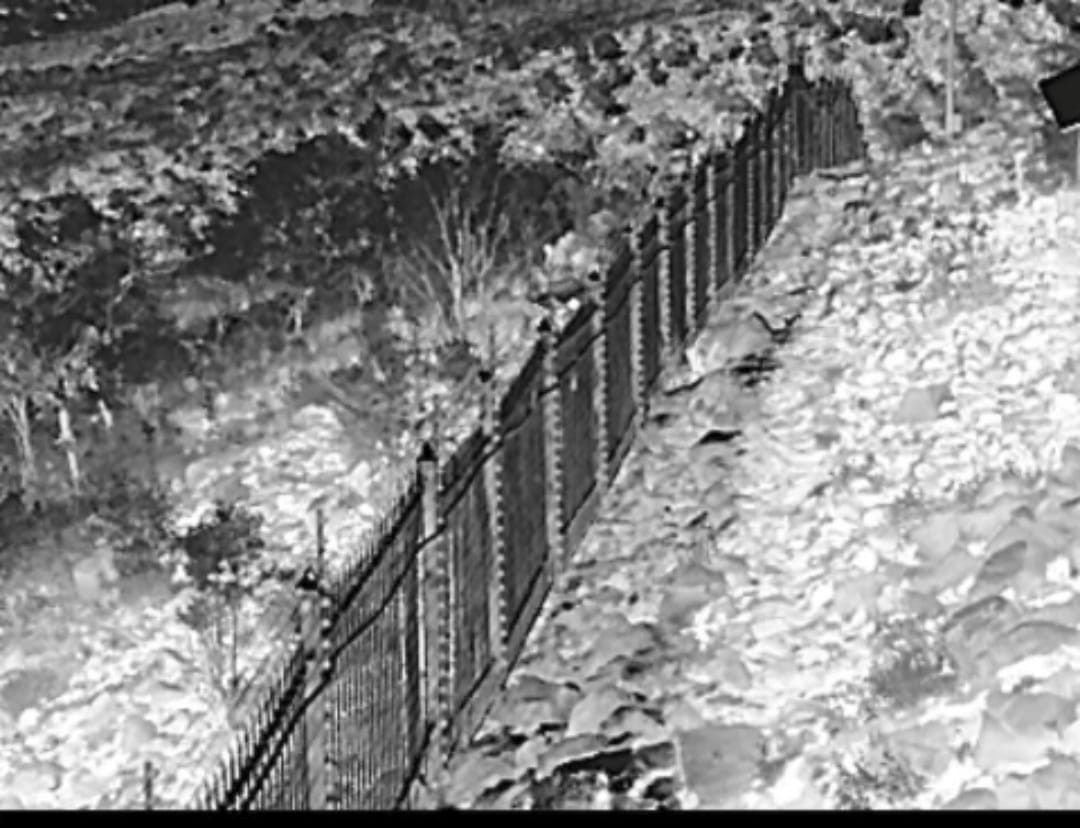
Thermal optical PTZ units deployed at Kleinfontein give a 1km human-detection range, letting a single unit cover ground that would otherwise take a line of poles and cabling.
Dust, smoke, glare, total darkness
Thermal detects radiated heat rather than reflected light, so performance holds through conditions that blind conventional cameras — useful on active mine sites and in the bush.
Fewer false alarms, not more alerts
A warm human shape against cool ground is a far cleaner signal for AI classification than a grainy night image, which means fewer wasted call-outs on moving branches and animals.
Thermal detects, optical identifies
Thermal tells you something is there; a cued PTZ tells you what it is. We deploy them together so an operator gets a verifiable image, not just an alarm.
The same fence line, in the dark.
Where it fits
Where we use it.
Thermal sits on perimeters that are long, dark and unmanned: mine boundaries, farm and reserve fence lines, and the outer edge of industrial sites. It pairs naturally with ground radar for cueing and with Reconeyez solar towers where there is no power. On the Sibanye-Stillwater deployment, Axis thermal cameras run on off-grid solar towers alongside long-range IR PTZ.
Book a free site assessment.
Tell us about your site and we will come back within one business day. No obligation, no pressure.